
When a roof needs replacing, the biggest decision is what to cover it with. In London the choice is usually between natural slate, clay tiles and concrete tiles. Slate costs most to install but lasts longest; concrete is cheapest upfront; clay sits in between.

Slate vs tile at a glance
| Material | Installed cost per m² (2026) | Typical lifespan | Best for |
|---|---|---|---|
| Concrete interlocking tile | £100 to £160 | 40 to 60 years | Budget re-roofs, 1930s semis and bungalows |
| Clay tile (plain or pantile) | £130 to £210 | 60 to 100 years | Edwardian and interwar houses, conservation areas |
| Natural slate (Spanish or Brazilian) | £160 to £220 | 80 to 100+ years | Victorian terraces, most of inner London |
| Welsh slate | £200 to £260+ | 100+ years | Listed buildings and conservation areas |
Ranges from 2026 UK cost guides, excluding scaffold. London prices tend to sit at the upper end. A whole re-roof also includes scaffold, membrane, battens, leadwork and waste.
Cost over the life of the roof
Dividing installed cost by lifespan changes the picture. One 2026 analysis puts Welsh slate at about £1.17 per m² per year, clay at about £1.43 and concrete at about £1.67. If you plan to stay in your home for decades, slate often works out cheapest in the long run.
Natural slate
- Pros: longest life, thin and elegant, light per square metre, the traditional look on Victorian London houses.
- Cons: highest upfront cost, slower to lay, quality varies, so buy from a reputable quarry.
- Watch out for: cheap imported slate with iron pyrite that rusts and stains.
Clay tiles
- Pros: long life, colour that weathers beautifully, often required in conservation areas.
- Cons: plain clay tiles need a steep pitch and a lot of tiles per square metre, which adds labour.
- Good to know: clay plain tiles suit Edwardian and Arts and Crafts houses across North London.
Concrete tiles
- Pros: cheapest, quick to lay, work on lower pitches (from about 17.5° for many interlocking tiles).
- Cons: shortest life, heavy, and colour fades over time.
- Important: concrete tiles are heavier than slate. Swapping slate for concrete can overload old roof timbers, so a structural check is essential.
Which should you choose?
- Victorian terrace with a slate roof: replace like for like with natural slate. It suits the house and avoids loading the structure.
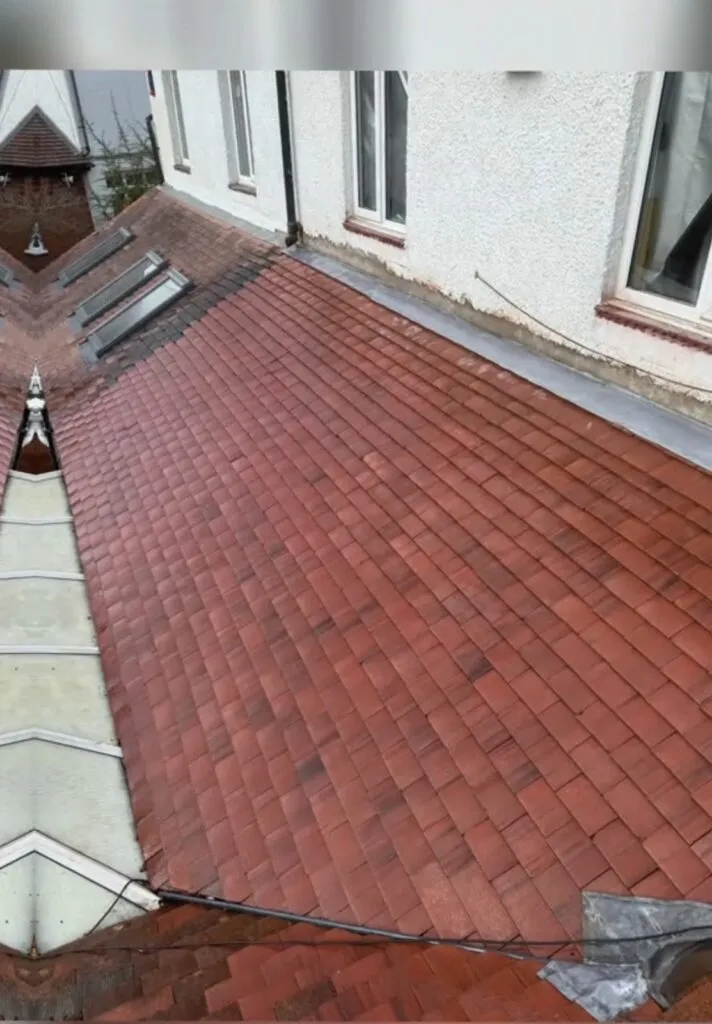
- 1930s semi or bungalow with concrete tiles: new concrete or clay tiles are both sensible; clay lasts longer.
- Conservation area or listed building: check with the council first. Like for like is normally expected, often Welsh slate or clay.
- Low-pitched extension roof: a low-pitch interlocking tile or a flat roof system may be the only option.
Planning permission
Like-for-like re-roofing does not normally need planning permission. Changing the material on a house in a conservation area, or any change to a listed building, may need consent. Replacing more than a quarter of the roof also means meeting building regulations for insulation.
Signs your roof needs replacing
Slipped or cracked tiles that keep coming back, porous and flaking slates, sagging underlay and repeated leaks are all signs. See our guide to the 6 signs you need a new roof and our roof replacement cost guide.
What about man-made slate?
Fibre cement and composite slates look like slate from a distance, cost less and are lighter. They are a reasonable budget option on extensions, but they do not last as long as natural slate and conservation officers rarely accept them on period houses.
Repair or replace?
If a few slates have slipped because their nails have rusted (called nail sickness), a repair can buy years. When slates or tiles are flaking across the whole roof, the underlay has failed or leaks keep moving, replacement is better value. A good roofer will tell you honestly which you need, with photos.

Frequently asked questions
Is slate better than tiles?
For lifespan and appearance on period houses, yes. For upfront cost, concrete tiles are cheaper.
Can I put tiles on a slate roof?
Sometimes, but concrete tiles are heavier and need a minimum pitch. The roof structure must be checked and, in conservation areas, consent may be needed.
How long does a slate roof last?
Good natural slate typically lasts 80 to 100 years or more; Welsh slate can last well over a century.
See our roofing projects: natural slate roof with dormers, main roof re-slate, lean-to re-tile and bungalow roof rebuild. Or visit our roofing service.
Need advice on your roof? Book a free site visit or call 07754 690740.
Roofing contractors in: Belsize Park, Crouch End, Mill Hill, Muswell Hill, Barnet, Wembley. See all areas we cover.

Omar runs Arkivon Group Ltd, a London building company based in NW10 that handles extensions, loft conversions, roofing and full renovations across North and West London. Ask Omar a question.